

Program Overview
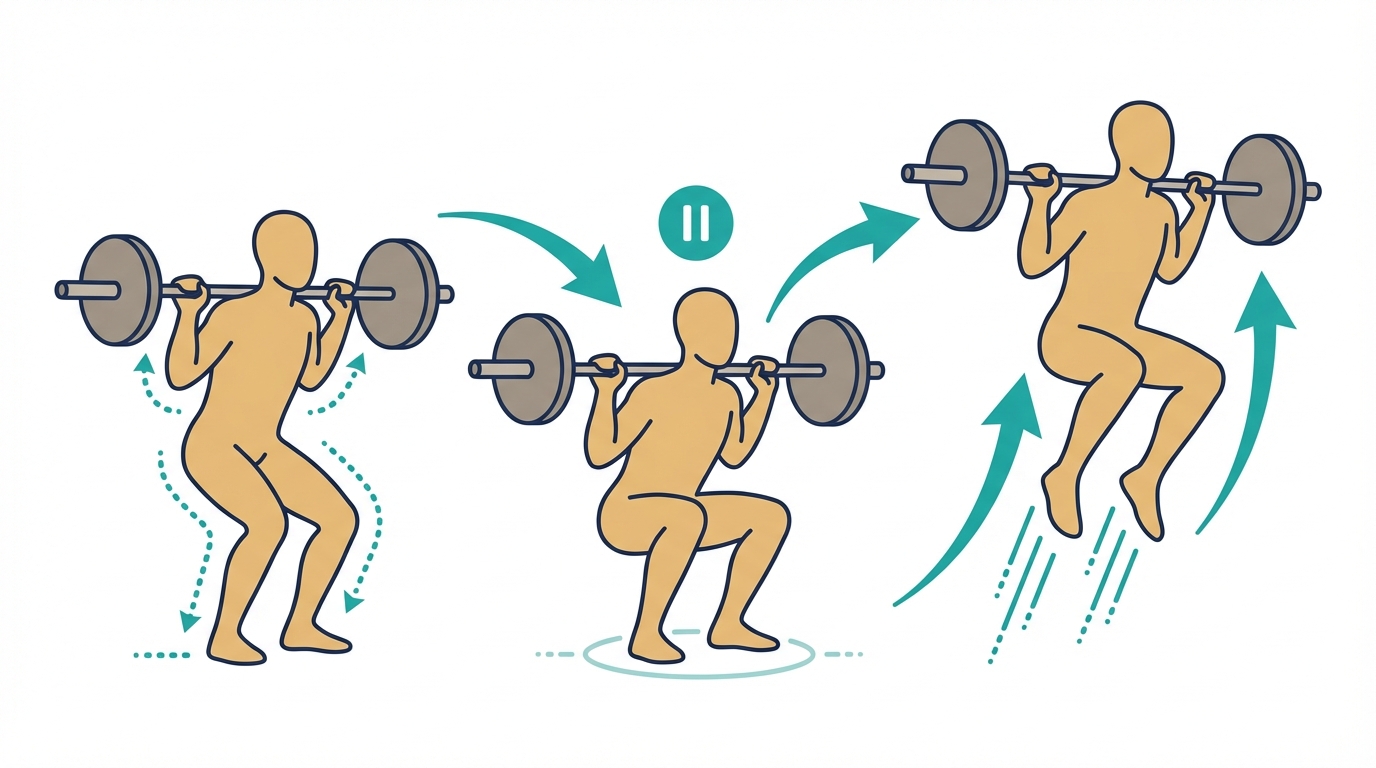
This 12-week program uses a triphasic training model to systematically develop explosive power, reactive speed, and sport-specific conditioning. Each four-week phase targets a different muscle action — eccentric, isometric, and concentric — building on the previous block so you peak at the end of week 12.
The program is designed for intermediate-level athletes who already have a solid strength base and want to translate that strength into on-field or on-court performance.
Who This Program Is For
- Current Athletes — Looking to improve power output, acceleration, and sport-specific conditioning during the off-season or pre-season.
- Former Athletes — Want to recapture athletic qualities like explosiveness and agility that have faded from years of general gym work.
- Fitness Enthusiasts — Intermediate lifters bored with bodybuilding splits who want to train like athletes and enjoy the variety of power-based programming.
Program Structure
| Parameter | Detail |
|---|---|
| Frequency | 4 days per week |
| Duration | 12 weeks (3 phases × 4 weeks) |
| Session Length | 60–90 minutes including warm-up |
| Intensity | Moderate → High → Very High (progressive) |
| Level | Intermediate |
| Equipment | Barbell, dumbbells, plyo boxes, medicine balls, sled, kettlebells |
Training Philosophy — The Triphasic Approach
Every athletic movement involves three distinct muscle actions: the eccentric (loading/absorbing force), the isometric (stabilizing at the transition), and the concentric (exploding). Most programs only train the concentric. This program trains all three in sequence so your body learns to produce force faster at every phase of movement.
Phase 1 (Weeks 1–4): Eccentric Emphasis
Slow, controlled lowering phases (3–5 second eccentrics) on main lifts. This builds tendon resilience, increases time under tension, and teaches your muscles to absorb and store elastic energy. You'll feel the difference in soreness early — that's your body adapting to handle greater forces.
Phase 2 (Weeks 5–8): Isometric / Power Development
We introduce contrast training (heavy lift + explosive movement) and isometric pauses at key joint angles. This phase bridges raw strength and explosive power. The nervous system learns to recruit motor units faster and transition from force absorption to force production with minimal energy leak.
Phase 3 (Weeks 9–12): Concentric / Peak Power
Maximum intent on every rep. Loads stay heavy but volume drops so you can focus on rate of force development. Plyometrics, sprint work, and sport-specific conditioning dominate. This is where all the preparation pays off — you'll be the fastest and most explosive you've ever been.
Phase Summary
| Phase | Weeks | Focus | Key Methods |
|---|---|---|---|
| 1 — Eccentric | 1–4 | Force absorption & tendon resilience | Slow eccentrics (3–5s), controlled tempos |
| 2 — Isometric/Power | 5–8 | Power transfer & rate of force development | Contrast sets, iso holds, plyometrics |
| 3 — Concentric/Peak | 9–12 | Peak power & sport-specific expression | Max intent, sprints, reactive plyos |
Weekly Schedule
| Day | Focus |
|---|---|
| Monday | Lower Body |
| Tuesday | Upper Body |
| Wednesday | OFF — Recovery / Light Mobility |
| Thursday | Full Body Explosive |
| Friday | Conditioning + Weak Points |
| Saturday / Sunday | OFF — Active Recovery |
Phase 1: Foundation — Eccentric Emphasis (Weeks 1–4)
Every main lift uses a 3–5 second eccentric (lowering) tempo. This builds the structural integrity needed for the explosive work in later phases. Control the weight down — own every inch of the range of motion.
Monday: Lower Body — Eccentric
Dynamic Warm-Up (15 min): Foam roll lower body (5 min), hip circles, leg swings, bodyweight squats, banded lateral walks, A-skips.
Monday — Lower Body Eccentric
| Exercise | Sets × Reps | Rest | Tempo | Notes |
|---|---|---|---|---|
| A1. Back Squat (eccentric emphasis) | 4×5 | 3 min | 5-0-1 | Wk1: 70% · Wk2: 72.5% · Wk3: 75% · Wk4: 70% (deload) |
| A2. Romanian Deadlift (eccentric emphasis) | 4×6 | 2–3 min | 4-0-1 | 3–4 sec lowering |
| B1. Bulgarian Split Squat | 3×8/leg | 90 sec | 3-1-1 | DB or barbell |
| B2. Single-Leg RDL | 3×8/leg | 90 sec | 3-1-1 | DB in opposite hand |
| C. Core Circuit (3 rounds) | — | 30 sec between | Pallof Press ×10/side, Dead Bug ×10/side, Plank ×30s |
Tuesday: Upper Body — Eccentric
Tuesday — Upper Body Eccentric
| Exercise | Sets × Reps | Rest | Tempo | Notes |
|---|---|---|---|---|
| A1. Bench Press (eccentric emphasis) | 4×5 | 3 min | 5-0-1 | 5 sec lowering |
| A2. Weighted Pull-ups (eccentric emphasis) | 4×6 | 2–3 min | 4-0-1 | 4 sec lowering; add weight as able |
| B1. Overhead Press | 3×6 | 2 min | 3-0-1 | Strict — no leg drive |
| B2. Barbell Row | 3×8 | 2 min | 2-1-1 | Pause at top for 1 sec |
| C1. DB Lateral Raise | 3×12–15 | 60 sec | Controlled tempo | |
| C2. Face Pulls | 3×15 | 60 sec | Squeeze at end range for 1 sec |
Thursday: Full Body — Explosive Introduction
This session introduces explosive movements at low complexity. The goal is learning to produce force quickly while maintaining control.
Thursday — Full Body Explosive Intro
| Exercise | Sets × Reps | Rest | Tempo | Notes |
|---|---|---|---|---|
| A1. Trap Bar Deadlift | 4×5 | 3 min | 2-0-X | X = explode up |
| A2. Front Squat | 3×6 | 2–3 min | 3-1-1 | Pause at bottom for 1 sec |
| B1. Medicine Ball Overhead Throw | 3×5 | 60 sec | Slam ball overhead to ground | |
| B2. Medicine Ball Chest Pass | 3×5 | 60 sec | Against wall; catch and throw | |
| B3. Medicine Ball Rotational Throw | 3×5/side | 60 sec | Side-facing wall; rotate through hips | |
| C1. Pull-ups (bodyweight) | 3×max | 90 sec | Stop 1–2 reps short of failure | |
| C2. Single-Leg Glute Bridge | 3×10/leg | 60 sec | 2 sec hold at top |
Friday: Conditioning + Weak Points
Friday — Conditioning Circuit (4 rounds)
| Exercise | Sets × Reps | Rest | Notes |
|---|---|---|---|
| Sled Push | 4×30 yds | — | Heavy — walk pace |
| KB Swing | 4×15 | — | Hip hinge, explosive extension |
| Battle Ropes | 4×20 sec | — | Alternating waves |
| Farmer's Carry | 4×40 yds | 90 sec after round | Heavy DBs or KBs |
Weak Point Training (15–20 min): After the conditioning circuit, spend time on individual weak points. Choose 2–3 exercises from the list below based on your needs:
- Glute bridges / hip thrusts for posterior chain
- Face pulls / band pull-aparts for shoulder health
- Single-leg balance work for ankle stability
- Extra grip work (plate pinches, dead hangs)
- Mobility drills for problem areas (hips, thoracic spine, ankles)
Phase 2: Power Development — Isometric / Power (Weeks 5–8)
This phase introduces contrast training — pairing a heavy strength movement with an explosive plyometric variation. The heavy lift potentiates the nervous system, and the plyometric movement takes advantage of that heightened activation. This is where strength starts to become power.
Monday: Lower Body — Power
Monday — Lower Power
| Exercise | Sets × Reps | Rest | Notes |
|---|---|---|---|
| A1. Back Squat | 3×3 @ 80% | 30 sec → A2 | Controlled eccentric, explosive concentric |
| A2. Jump Squat (bodyweight) | 3×3 | 3 min | Max height; land soft |
| B. Power Clean from Hang | 5×3 | 2–3 min | Focus on hip extension & catch |
| C1. Box Jumps | 4×3 | 90 sec | Step down between reps; 24–30" box |
| C2. Single-Leg Box Jump | 3×2/leg | 90 sec | Lower box; stick the landing |
| D. Nordic Hamstring Curl | 3×4–6 | 90 sec | Slow eccentric; push off floor to assist if needed |
Tuesday: Upper Body — Power
Tuesday — Upper Power
| Exercise | Sets × Reps | Rest | Notes |
|---|---|---|---|
| A. Bench Press (speed work) | 8×3 @ 60% | 60 sec | Maximum bar speed; pause 1 sec at chest |
| B. Plyo Push-ups | 4×5 | 90 sec | Hands leave ground; land soft |
| C. Weighted Pull-ups | 4×5 | 2 min | Add weight; explosive pull |
| D. Med Ball Overhead Throw | 4×5 | 90 sec | Full hip extension into throw |
| E. DB Snatch | 3×5/arm | 90 sec | Single arm; from floor to overhead in one motion |
Thursday: Full Body — Power + Agility
Thursday — Full Body Power + Agility
| Exercise | Sets × Reps | Rest | Notes |
|---|---|---|---|
| A. Trap Bar Jump | 4×3 | 2–3 min | Load 30–40% 1RM; jump and land with bar |
| B. Front Squat | 4×3 @ 80–85% | 2–3 min | Controlled tempo; upright torso |
| C. Agility Ladder Drills | 5 min | — | Ali shuffle, icky shuffle, in-out, lateral |
| D. Broad Jumps | 4×3 | 90 sec | Max distance; stick landing |
| E. Lateral Bounds | 3×5/side | 90 sec | Single-leg hop side-to-side; stick each landing |
| F. Explosive Pull-ups | 3×max | 90 sec | Pull chest to bar; bodyweight only |
Friday: Conditioning + Recovery
Phase 2 Fridays shift toward aerobic conditioning and recovery to support the increased intensity of power work earlier in the week.
Friday — Conditioning + Recovery
| Exercise | Sets × Reps | Rest | Notes |
|---|---|---|---|
| Tempo Run or Bike | 20–30 min | — | Conversational pace; 65–75% max HR |
| Mobility Circuit | 20 min | — | 90/90 hip stretch, pigeon, T-spine rotation, couch stretch, ankle mobilization |
Phase 3: Peak Power — Concentric / Peak Expression (Weeks 9–12)
This is the culmination phase. Volume is low, intensity is high, and every single rep is performed with maximum intent. The nervous system is primed from the previous eight weeks — now we express that preparation as peak power and speed.
Monday: Peak Lower Body
Monday — Peak Lower
| Exercise | Sets × Reps | Rest | Notes |
|---|---|---|---|
| A1. Heavy Back Squat | 2×2 @ 85–90% | 30 sec → A2 | Controlled down, explode up |
| A2. Jump Squat | 2×3 | 3–4 min | Bodyweight; max height |
| B. Power Clean from Floor | 5×2 | 2–3 min | Full clean; catch in front squat position |
| C. Depth Jumps | 3×3 | 2 min | Step off 18–24" box, immediately jump max height on landing |
| D. Single-Leg Hurdle Hops | 3×4/leg | 90 sec | 6–12" mini hurdles; minimize ground contact time |
| E. Heavy Sled Push | 4×15 yds | 2 min | Max effort; full recovery between sets |
Tuesday: Peak Upper Body
Tuesday — Peak Upper
| Exercise | Sets × Reps | Rest | Notes |
|---|---|---|---|
| A1. Bench Press | 2×2 @ 85% | 30 sec → A2 | Pause 1 sec at chest; explode |
| A2. Plyo Push-up | 2×4 | 3 min | Maximum hand height |
| B. Med Ball Shot Put | 3×3/side | 90 sec | Single-arm rotational throw into wall |
| C. Weighted Pull-ups (explosive) | 4×3 | 2 min | Pull as fast as possible; chest to bar |
| D. Clap Push-ups | 3×max | 90 sec | Stop when speed drops; quality over quantity |
| E. DB Clean and Press | 3×4/arm | 90 sec | Single DB; full hip extension into press |
Thursday: Peak Full Body + Speed
Thursday — Peak Full Body + Speed
| Exercise | Sets × Reps | Rest | Notes |
|---|---|---|---|
| A. Trap Bar Jump (heavy) | 3×2 @ 75–80% | 2–3 min | Max intent; step down between reps for reset |
| B1. Sprint — 10 yd | 5 reps | 60 sec | 3-point stance start; full recovery |
| B2. Sprint — 20 yd | 3 reps | 90 sec | Standing start; build to top speed |
| C1. 5-10-5 Shuttle (Pro Agility) | 4 reps | 90 sec | Alternate starting direction |
| C2. L-Drill | 4 reps | 90 sec | Alternate direction each rep |
| D. Reactive Plyometrics | 3×4 | 90 sec | Partner or light cue; react and jump/bound on signal |
| E. Weighted Carries | 3×40 yds | 90 sec | Alternate: Farmer's walk, overhead carry, suitcase carry |
Friday: Sport-Specific Conditioning
Choose one of the conditioning options below based on your sport and energy system demands.
Option 1: High-Intensity Intervals
Interval Protocol
| Exercise | Sets × Reps | Rest | Notes |
|---|---|---|---|
| 30 sec All-Out Effort (bike, rower, or sprint) | 8–10 rounds | 90 sec between rounds | RPE 9–10 during work |
Option 2: Sport-Specific Circuit
Sport-Specific Circuit (3–4 rounds)
| Exercise | Sets × Reps | Rest | Notes |
|---|---|---|---|
| Shuttle Sprints (5-10-5) | 3–4 reps | 30 sec | Max effort |
| Med Ball Slam | 3–4 × 8 | 30 sec | Overhead slam |
| Lateral Shuffle + Sprint | 3–4 × 20 yds | 30 sec | Shuffle 10 yds, sprint 10 yds |
| KB Swing | 3–4 × 10 | 60 sec after round | Explosive hip extension |
Exercise Library
Olympic Lifts
Olympic lift variations are central to this program. If you're unfamiliar with these movements, invest time with a qualified coach before loading heavy.
| Exercise | Key Cues | Common Mistakes |
|---|---|---|
| Power Clean (Hang) | Start above knee, violent hip extension, elbows high in catch | Pulling with arms; not extending hips fully |
| Power Clean (Floor) | Set up like a deadlift, first pull to knee, then explode | Rounding back off floor; early arm bend |
| DB Snatch | Single arm, floor to overhead, hip drive | Using shoulder instead of hips; not locking out overhead |
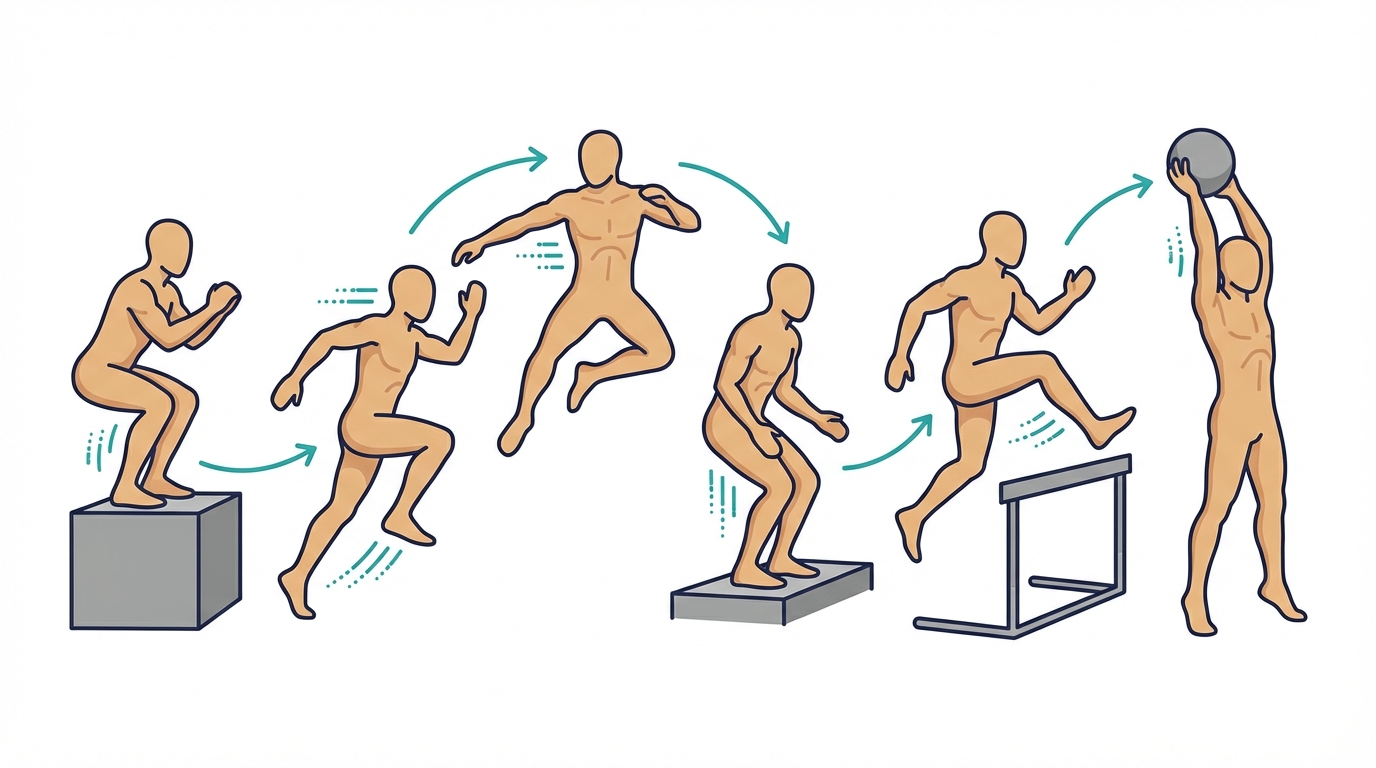
Plyometric Progressions
Lower Body Plyometrics
| Level | Exercise | Phase |
|---|---|---|
| 1 — Basic | Box Jump (step down) | Phase 1 |
| 2 — Intermediate | Broad Jump, Lateral Bound | Phase 2 |
| 3 — Advanced | Depth Jump, Single-Leg Hurdle Hop, Reactive Plyo | Phase 3 |
Upper Body Plyometrics
| Level | Exercise | Phase |
|---|---|---|
| 1 — Basic | Med Ball Chest Pass, Overhead Throw | Phase 1 |
| 2 — Intermediate | Plyo Push-up, Med Ball Shot Put | Phase 2 |
| 3 — Advanced | Clap Push-up, Explosive Weighted Pull-up | Phase 3 |
Speed Drills
Acceleration Drills
| Drill | Distance | Coaching Cue |
|---|---|---|
| 3-Point Start Sprint | 10 yds | Drive knees, stay low for first 5 yds, aggressive arm swing |
| Wall Drive (march/run) | — | Lean into wall at 45°, drive knees to chest alternating |
| Sled Sprint | 15–20 yds | Low body angle, short powerful steps |
Top Speed Drills
| Drill | Distance | Coaching Cue |
|---|---|---|
| Flying 20 yd Sprint | 20 yds (with 10 yd build-up) | Gradually accelerate through 10 yds, then hit max speed for 20 |
| Wicket Runs | 30–40 yds | Mini hurdles spaced at stride length; tall posture, quick ground contact |
Change of Direction Drills
| Drill | Description | Coaching Cue |
|---|---|---|
| 5-10-5 Shuttle (Pro Agility) | Sprint 5 yds, touch, sprint 10 yds, touch, sprint 5 yds | Low hips on change; plant outside foot hard |
| L-Drill | Sprint 5 yds, cut 90° left, sprint 5 yds, round cone, cut back | Decelerate before cut; stay low through turns |
| T-Drill | Sprint forward, shuffle left, shuffle right, backpedal | Face forward the entire time; quick feet |
Form Video Guides
The explosive movements in this program require precise technique. Study these guides — especially the power clean, which has the steepest learning curve.
Barbell Back Squat
Power Clean
Box Jump
Barbell Bench Press
Sled Push
Conditioning Protocols
Different sports stress different energy systems. Use the table below to match your conditioning to your sport's demands.
| Energy System | Work : Rest | Duration | Examples | Best For |
|---|---|---|---|---|
| Alactic Power (ATP-PC) | 1:10–1:15 | 5–10 sec efforts | Sprint 10–20 yds, box jumps, sled push | Football, baseball, sprint events, combat sports |
| Glycolytic Capacity | 1:3–1:5 | 30–90 sec efforts | Bike/rower intervals, shuttle runs, circuit training | Basketball, soccer, hockey, MMA |
| Aerobic Base | Continuous | 20–40 min | Tempo run, bike at 65–75% HR, swimming | All sports — recovery foundation, endurance sports |
Nutrition for Performance
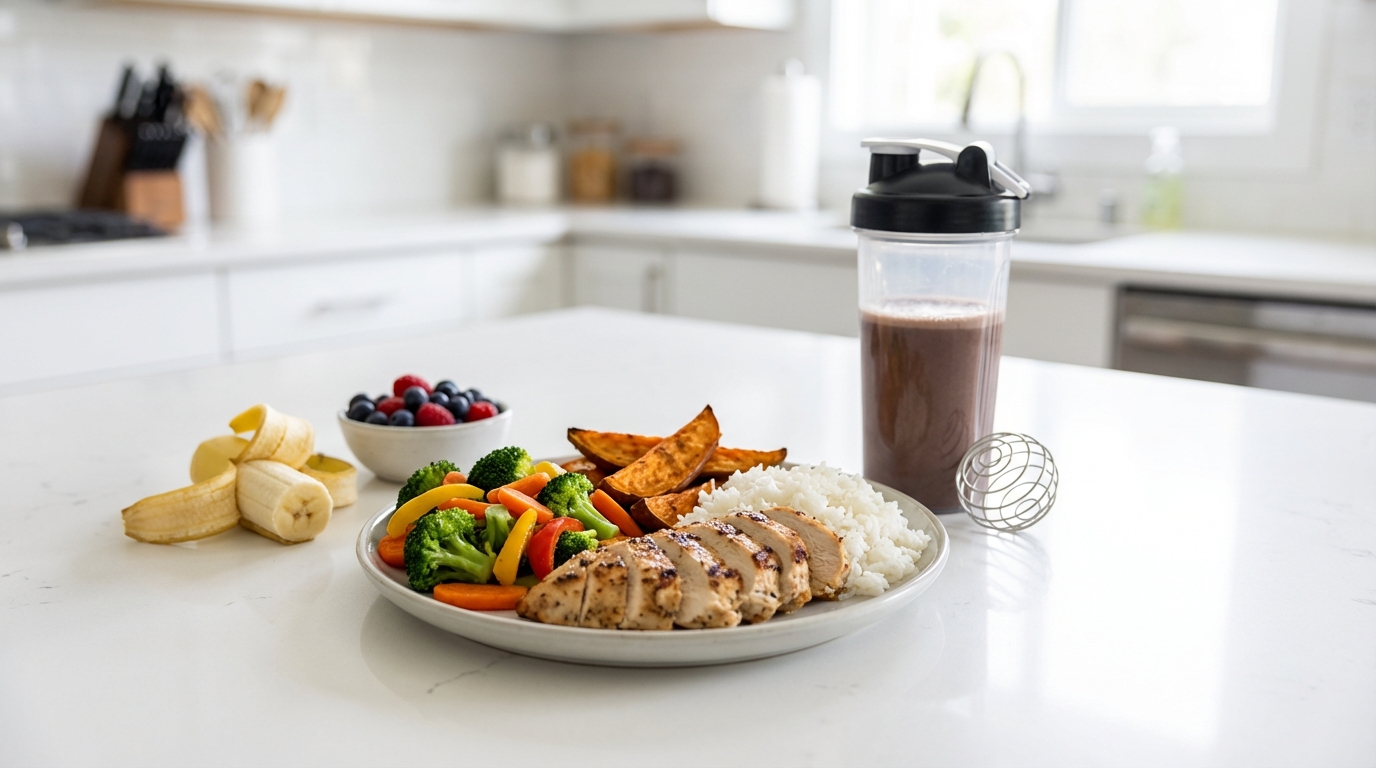
Athletic performance demands quality fuel. Unlike bodybuilding nutrition, the goal here is fueling performance and recovery, not just body composition.
Pre-Workout (1–3 hours before)
- Moderate protein (20–30g) + complex carbs (40–60g)
- Example: Chicken breast with rice, or Greek yogurt with oatmeal and banana
- Avoid high-fat meals — they slow digestion
During Training
- Water for sessions under 60 minutes
- For sessions over 75 minutes: add electrolytes or a sports drink (30–60g carbs/hr)
Post-Workout (within 2 hours)
- Protein (30–40g) + fast-digesting carbs (50–80g)
- Example: Whey shake with banana and honey, or chicken with white rice and fruit
- This window is especially important on training days with explosive/plyo work
Daily Targets
Daily Macronutrient Targets
| Nutrient | Target | Notes |
|---|---|---|
| Calories | Maintenance + 200–500 | Higher on heavy training days; slightly lower on rest days |
| Protein | 1.6–2.2g per kg bodyweight | Prioritize quality sources: meat, fish, eggs, dairy, legumes |
| Carbohydrates | 3–5g per kg bodyweight | Higher end on training days; fuels explosive work |
| Fat | 0.8–1.2g per kg bodyweight | Healthy fats: olive oil, avocado, nuts, fatty fish |
| Hydration | 0.5 oz per lb bodyweight + 16–24 oz per hour of training | Monitor urine color — pale yellow is ideal |
Recovery Strategies
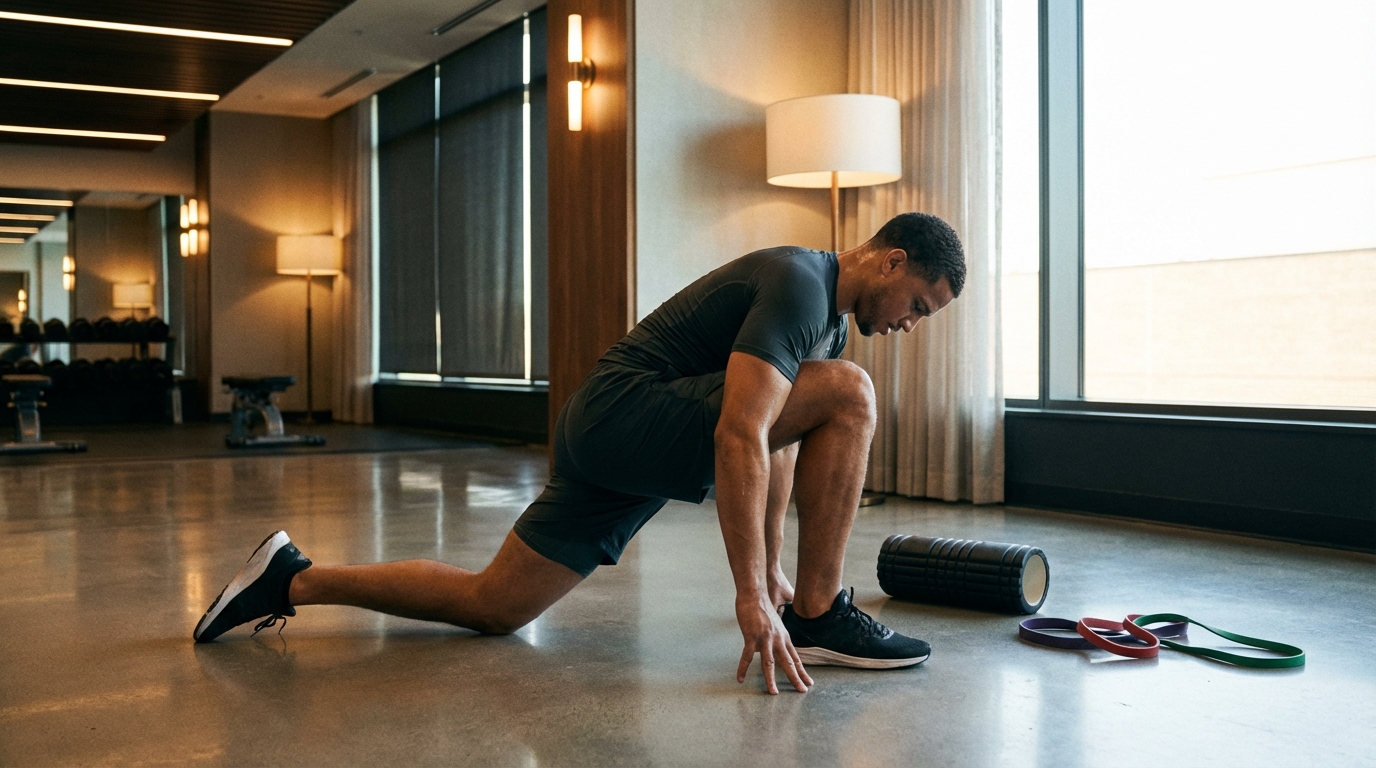
Power training is neurologically demanding. Recovery is not optional — it's where adaptation happens.
Sleep
- Target: 7–9 hours per night; 8+ is ideal for athletes
- Maintain a consistent sleep/wake schedule, even on weekends
- Cool, dark room (65–68°F / 18–20°C)
- No screens 30–60 minutes before bed
- Consider a 20–30 minute nap on heavy training days
Contrast Therapy
- Alternate between hot (3–4 min) and cold (1 min) for 3–4 cycles
- End on cold
- Best used 3+ hours after training (not immediately after — acute inflammation is part of adaptation)
Soft Tissue Work
- Foam roll major muscle groups 5–10 minutes daily
- Focus on quads, glutes, T-spine, and calves
- Lacrosse ball for targeted areas (hip flexors, pecs, plantar fascia)
- Consider professional sports massage every 2–4 weeks during peak phases
Active Recovery
- Off-day activities: light swimming, walking, yoga, easy cycling
- Keep heart rate below 120 BPM
- 20–30 minutes is sufficient — the goal is blood flow, not fatigue
Testing and Progress
Test at the start of Week 1 and again at the end of Week 12. This gives you objective data on how the program affected your athletic qualities.
Performance Tests
| Test | Week 1 Baseline | Week 12 Goal | Expected Improvement |
|---|---|---|---|
| Back Squat 1RM | Test | Retest | 5–12% increase |
| Power Clean 1RM | Test | Retest | 8–15% increase |
| Vertical Jump | Measure (inches) | Remeasure | 2–4 inch increase |
| Broad Jump | Measure (inches) | Remeasure | 4–8 inch increase |
| 10 yd Sprint | Time | Retime | 0.05–0.15 sec improvement |
| Pro Agility (5-10-5) | Time | Retime | 0.1–0.3 sec improvement |
| 3-Rep Max Bench Press | Test | Retest | 5–10% increase |
Common Mistakes
- 1. Skipping Phase 1: The eccentric phase builds the structural foundation. Jumping straight to power work without it dramatically increases injury risk and limits your ceiling.
- 2. Training through fatigue on power days: If your jump height drops or your bar speed slows noticeably, stop the set. Power training is about quality, not grinding through reps. Fatigue kills explosiveness.
- 3. Not eating enough: This program is metabolically demanding. Under-eating — especially carbohydrates — will tank your performance and recovery. You can't cut weight and peak power simultaneously.
- 4. Neglecting conditioning: Power without conditioning is useless in sport. If you can't repeat your explosive efforts, you're only dangerous for the first 30 seconds of a game.
- 5. Poor warm-up: A 15-minute dynamic warm-up is non-negotiable before explosive work. Cold muscles and tendons don't absorb force well. Skipping it is the fastest path to a hamstring tear.
Modifications
No Specialized Equipment
Don't have plyo boxes, sleds, or medicine balls? Use these substitutions:
| Equipment | Substitute |
|---|---|
| Sled Push | Prowler push on turf, heavy Farmer's Carry, or hill sprints |
| Plyo Box | Sturdy bench or bleacher; or use broad jumps / tuck jumps instead |
| Medicine Ball | Slam ball, sandbag, or heavy DB for throws (modify throw to slam) |
| Battle Ropes | KB swings, burpees, or rowing machine intervals |
| Agility Ladder | Cones for change-of-direction drills, or tape on ground |
In-Season Modifications
If you're using this program during a competitive season:
- Reduce training to 2–3 days per week (drop Friday conditioning — you're getting that from games)
- Cut volume by 30–40% but maintain intensity on key lifts
- Prioritize recovery days around game schedules
- Keep power work but reduce plyometric volume by half
- Monitor fatigue closely — if performance drops for 2+ sessions, take an extra rest day
Older Athletes (35+)
Masters athletes can absolutely run this program with smart modifications:
- Extend each phase to 5–6 weeks instead of 4 (making it a 15–18 week program)
- Add an extra rest day between sessions if recovery is slow
- Replace depth jumps with box jumps (lower impact on joints)
- Cap plyometric volume at 60–80 ground contacts per session
- Increase warm-up time to 20 minutes
- Prioritize soft tissue work and mobility daily
Frequently Asked Questions
Q: Can I run this program if I haven't hit the strength prerequisites?
It's not recommended. The plyometric and explosive work in Phases 2 and 3 require a solid strength foundation to be both safe and effective. Spend 8–12 weeks building to a 1.5× BW squat and 2× BW deadlift first, then start this program.
Q: What if I don't have access to Olympic lifting coaching?
Replace power cleans with trap bar jumps or kettlebell swings. These movements train similar hip extension patterns with a much shorter learning curve. As you gain experience, consider working with a coach to add Olympic lifts.
Q: Can I add extra upper body hypertrophy work?
You can add 2–3 sets of isolation work (curls, tricep pushdowns, lateral raises) at the end of upper body days, but keep it brief. The primary goal is power — don't let vanity work eat into your recovery.
Q: How do I know if I'm recovering enough?
Track your jump height or grip strength each morning. If either drops more than 10% from baseline for 2+ days, you're under-recovered. Other signs: persistent fatigue, elevated resting heart rate, poor sleep, and loss of motivation.
Q: Should I do this program year-round?
No. Run it for 12 weeks, then transition to a maintenance or general strength phase for 4–6 weeks before repeating. Continuous high-intensity power work without periodization leads to burnout and overuse injuries.
Q: Can I combine this with sport practice?
Yes — that's the ideal scenario. Schedule heavy lifting days away from intense practices. For example, lift on practice-light days and keep the day before competition for rest or light mobility only.
Q: What if I miss a week due to travel or illness?
If you miss one week, repeat that week when you return. If you miss two or more weeks, drop back one week in the program and ramp back up. Don't try to "make up" missed sessions by doubling up.
Q: Is this program suitable for female athletes?
Absolutely. The triphasic model works regardless of sex. Adjust loads to your own strength levels (the percentage-based prescriptions handle this automatically). Female athletes may want to track training around their menstrual cycle — higher intensity work tends to feel best in the follicular phase.