

Program Overview
This 12-week program is designed for beginners who want to build a solid foundation of strength and learn fundamental movement patterns. You'll train three days per week, allowing adequate recovery between sessions. Each phase gradually increases intensity while decreasing rep ranges, a proven approach called linear periodization that drives consistent progress.
Who This Program Is For
- You have less than 6 months of consistent weight training experience
- You can commit to 3 training sessions per week (roughly 45-60 minutes each)
- You have access to a barbell, dumbbells, a bench, and a squat rack
- You want to build a strong foundation before moving to more advanced programming
Who This Program Is NOT For
- Experienced lifters looking for advanced periodization
- Anyone recovering from a serious injury (consult your physical therapist first)
- People who can only train 1 day per week (you'll need at least 2 for meaningful progress)
What to Expect After 12 Weeks
Results depend on body weight, starting point, nutrition, and recovery, but here are realistic strength benchmarks:
| Lift | Men (approx.) | Women (approx.) |
|---|---|---|
| Back Squat | 0.75-1.0x bodyweight | 0.5-0.75x bodyweight |
| Bench Press | 0.6-0.8x bodyweight | 0.35-0.5x bodyweight |
| Deadlift | 1.0-1.25x bodyweight | 0.75-1.0x bodyweight |
| Overhead Press | 0.4-0.55x bodyweight | 0.25-0.35x bodyweight |
Program Structure
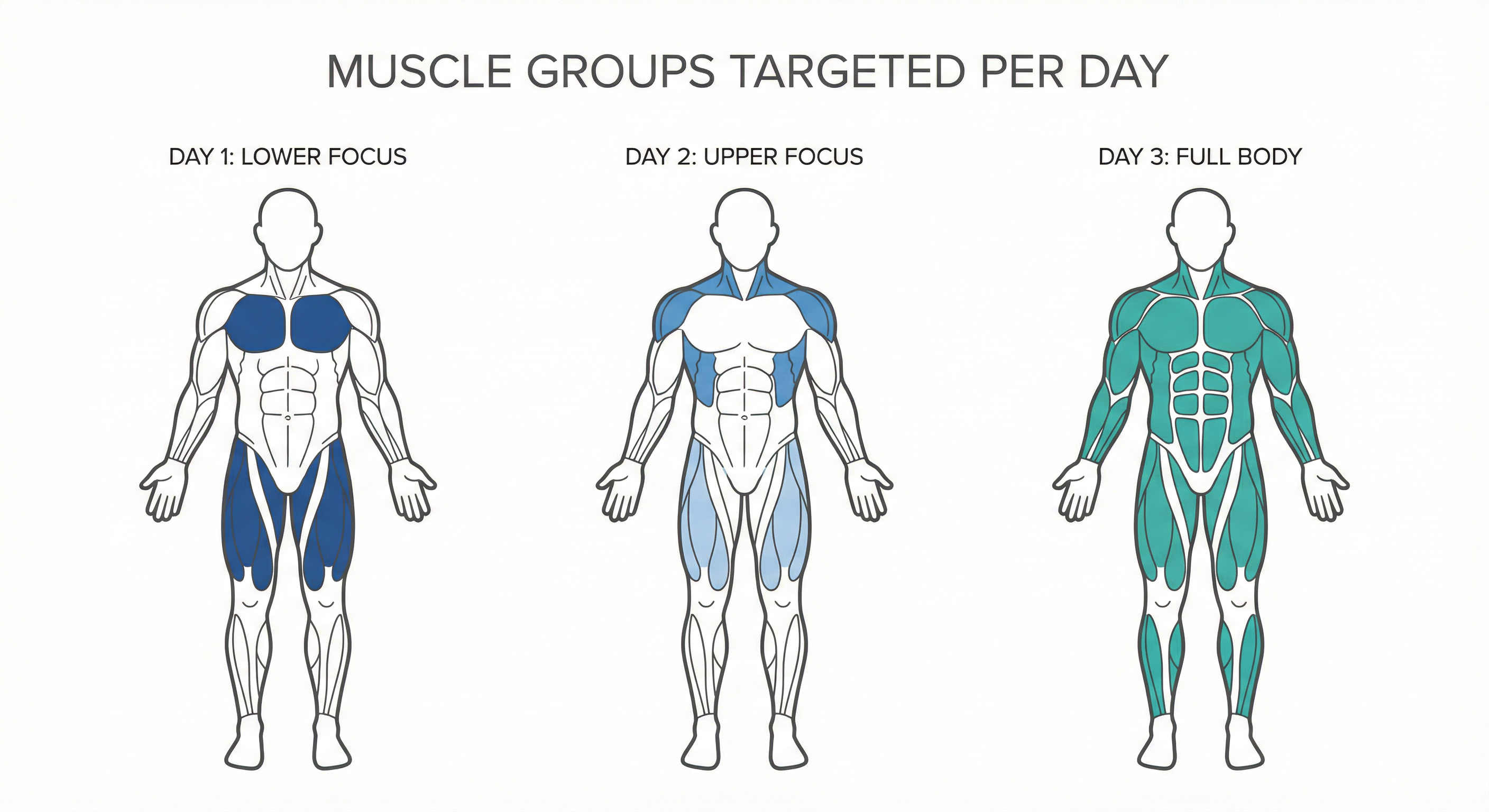
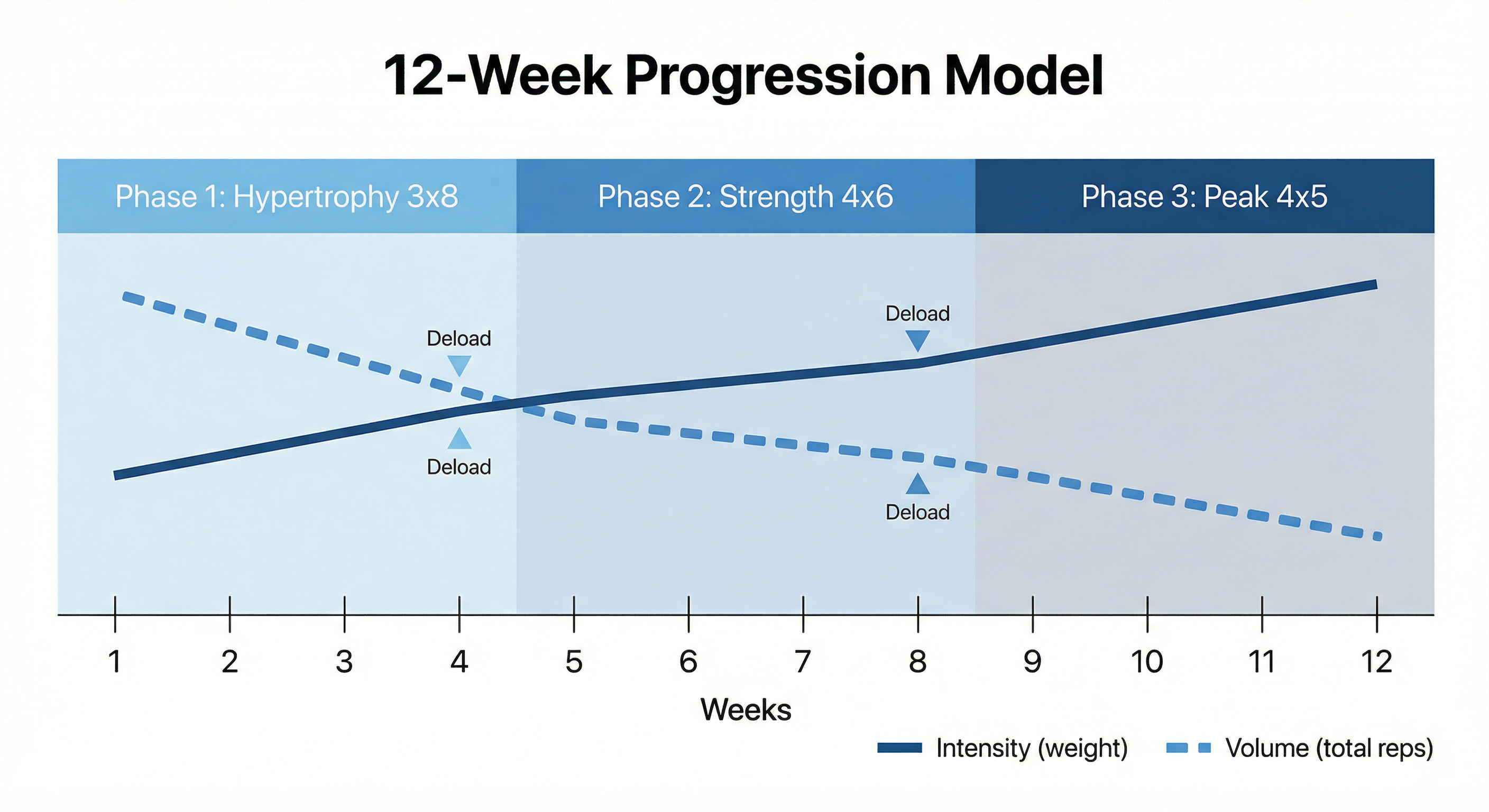
The program uses linear periodization, meaning we start with higher reps and lighter weight, then progressively shift toward heavier loads and fewer reps.
| Phase | Weeks | Sets x Reps | Rest (Main Lifts) | Focus |
|---|---|---|---|---|
| Hypertrophy | 1-4 | 3 x 8 | 2-3 min | Build work capacity, learn movements |
| Strength | 5-8 | 4 x 6 | 2-3 min | Increase load, refine technique |
| Peak | 9-12 | 4 x 5 | 3 min | Maximize strength gains |
| Parameter | Detail |
|---|---|
| Frequency | 3 days per week (e.g., Monday, Wednesday, Friday) |
| Session Length | 45-60 minutes including warm-up |
| Rest Between Sessions | At least one full day |
| Progression | Add 2.5-5 lbs per week on main lifts when all prescribed reps are completed |
Weekly Schedule
Day 1: Lower Focus
Day 1: Lower Focus
| Exercise | Wk 1-4 | Wk 5-8 | Wk 9-12 | Rest | Tempo |
|---|---|---|---|---|---|
| A1. Barbell Back Squat | 3×8 | 4×6 | 4×5 | 2-3 min | 3-1-1 |
| A2. Barbell Bench Press | 3×8 | 4×6 | 4×5 | 2-3 min | 3-1-1 |
| B1. DB Romanian Deadlift | 3×10-12 | 3×10-12 | 3×10-12 | 90 sec | 3-1-1 |
| B2. DB Row (each arm) | 3×10-12 | 3×10-12 | 3×10-12 | 90 sec | 2-1-1 |
| B3. Plank | 3×30-60s | 3×30-60s | 3×30-60s | 60 sec | Hold |
Day 2: Upper Focus
Day 2: Upper Focus
| Exercise | Wk 1-4 | Wk 5-8 | Wk 9-12 | Rest | Tempo |
|---|---|---|---|---|---|
| A1. Barbell Overhead Press | 3×8 | 4×6 | 4×5 | 2-3 min | 2-1-1 |
| A2. Barbell Deadlift | 3×5 | 4×5 | 4×3 | 3 min | 2-1-1 |
| B1. Lat Pulldown | 3×8-10 | 3×8-10 | 3×8-10 | 90 sec | 2-1-1 |
| B2. DB Goblet Squat | 3×12-15 | 3×12-15 | 3×12-15 | 90 sec | 3-1-1 |
| B3. Dead Bug | 3×10/side | 3×10/side | 3×10/side | 60 sec | Controlled |
Day 3: Full Body
Day 3: Full Body
| Exercise | Wk 1-4 | Wk 5-8 | Wk 9-12 | Rest | Tempo |
|---|---|---|---|---|---|
| A1. Barbell Front Squat | 3×8 | 3×6 | 4×5 | 2-3 min | 3-1-1 |
| A2. Barbell Row | 3×8 | 4×6 | 4×5 | 2 min | 2-1-1 |
| B1. DB Bench Press | 3×10-12 | 3×10-12 | 3×10-12 | 90 sec | 3-1-1 |
| B2. Walking Lunges | 3×10/leg | 3×10/leg | 3×10/leg | 90 sec | 2-1-1 |
| B3. Pallof Press | 3×10/side | 3×10/side | 3×10/side | 60 sec | 2-2-2 |
Exercise Cues
Each training day follows a main lift + accessory structure. Main lifts are compound barbell movements that train multiple joints and large muscle groups. Focus on learning these movements well — they are the foundation of everything.
Main Lifts
| Exercise | Key Cues | Common Mistakes |
|---|---|---|
| Barbell Back Squat | Brace core before descending · Push knees out over toes · Hip crease below top of knee | Heels rising · Knees caving inward · Leaning too far forward |
| Barbell Bench Press | Squeeze shoulder blades together and down · Lower bar to lower chest / sternum · Drive feet into floor, press in slight arc toward face | Flaring elbows to 90° · Bouncing bar off chest · Lifting hips off bench |
| Barbell Deadlift | Bar over mid-foot, shins nearly touching · Neutral spine — no rounding · "Push the floor away" rather than pull | Rounding lower back · Jerking bar off floor · Bar drifting away from body |
| Barbell Overhead Press | Start with bar on collarbone / front delts · Press straight up, move head back to clear path · Lock out fully overhead, bar over mid-foot | Excessive backward lean · Pressing bar forward · Using legs to push-press |
Accessory Exercises
| Exercise | Key Cues |
|---|---|
| DB Romanian Deadlift | Push hips back with a soft knee bend — feel the hamstrings stretch · Keep dumbbells close to your legs |
| DB Row (each arm) | Pull elbow toward hip, squeeze shoulder blade at top · Keep torso stable — no rotating |
| Lat Pulldown | Pull bar to upper chest, driving elbows down and back · Control the return |
| DB Goblet Squat | Hold dumbbell at chest height, elbows inside knees at bottom · Sit between your legs |
| Walking Lunges | Take long strides — front knee over ankle, not past toes · Push off the front foot |
| Plank | Straight line from head to heels — squeeze glutes, brace abs · Don't let hips sag or pike |
| Dead Bug | Press lower back flat into the floor throughout · Extend opposite arm and leg slowly |
| Pallof Press | Press cable straight out from chest — resist the rotation · Brace core hard, hold extended |
| Barbell Front Squat | Bar rests on front delts with elbows high · Stay more upright than back squat |
| Barbell Row | Hinge at hips ~45°, pull bar to lower chest / upper belly · Squeeze shoulder blades at top |
| DB Bench Press | Same setup as barbell bench — shoulder blades pinched, feet planted · Press up and slightly inward |
Form Video Guides
Watch these short video guides for each main lift. Proper form on these four movements is the most important thing you'll learn in this program.
Barbell Back Squat
Barbell Bench Press
Barbell Deadlift
Barbell Overhead Press
Warm-Up Routine
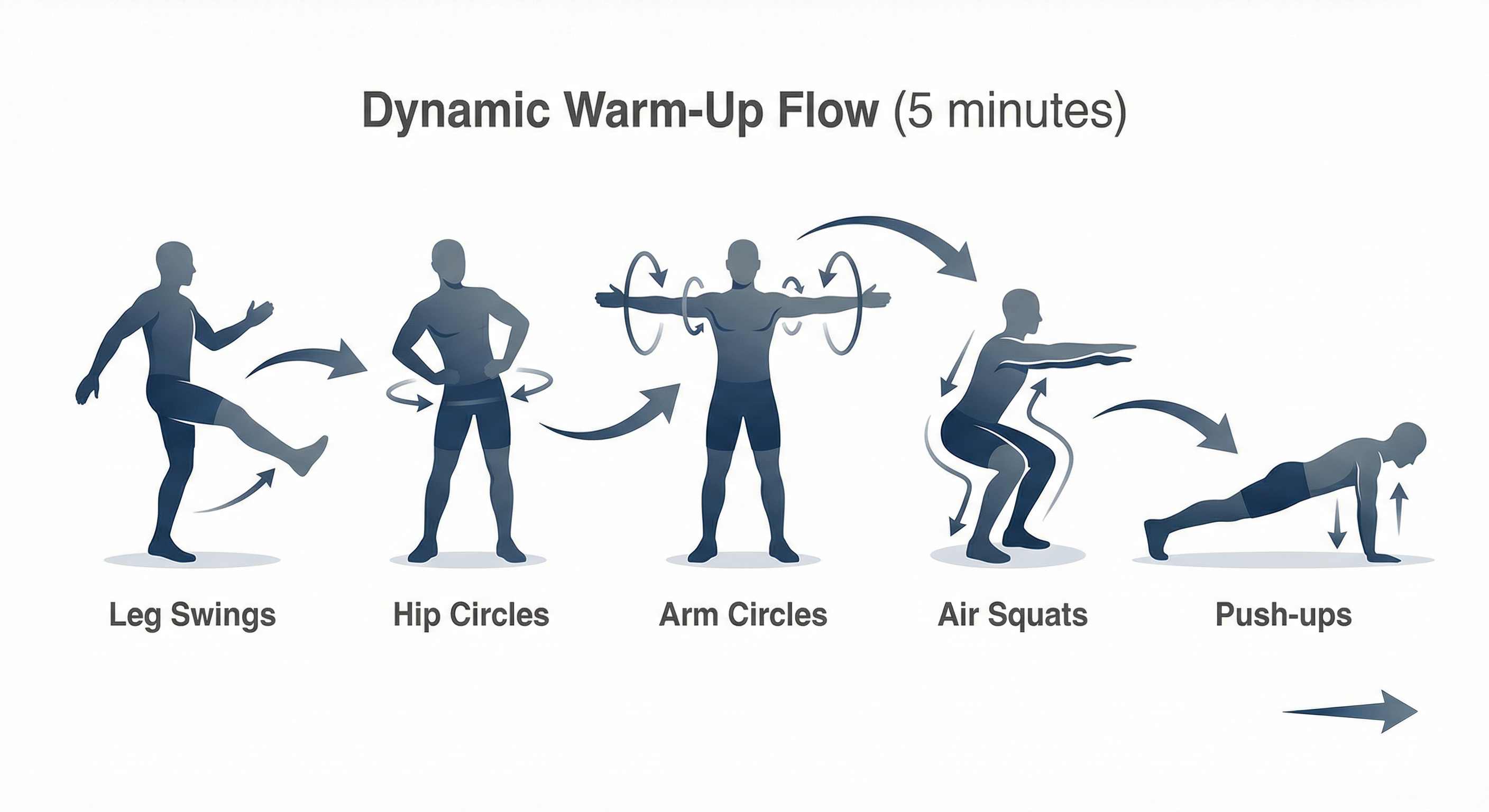
Never skip your warm-up. Budget 10-12 minutes before every session.
Dynamic Stretching (5 minutes)
| Drill | Target Area | Description |
|---|---|---|
| Leg Swings (front/back) | Hips, hamstrings | Hold a rack, swing one leg forward and back |
| Leg Swings (side-to-side) | Adductors, hips | Swing leg across body and out to side |
| Hip Circles | Hip capsule | Hands on hips, rotate in large circles |
| Arm Circles | Shoulders | Small to large circles forward, then backward |
| Bodyweight Squats | Full lower body | Slow and controlled, focus on depth |
| Push-ups (5-10) | Chest, shoulders | Warm up pressing muscles |
Ramp-Up Sets (before each main lift)
| Set | % of Working Weight | Reps |
|---|---|---|
| Warm-up 1 | 50% | 5 |
| Warm-up 2 | 70% | 3 |
| Warm-up 3 (optional) | 85% | 1-2 |
Progression Guidelines
Understanding RPE
RPE is a 1-10 scale measuring how hard a set felt. Most working sets should fall between RPE 7-8.
RPE Scale Reference
RPE = Rate of Perceived Exertion · RIR = Reps in ReserveMost working sets should land at RPE 7–8. This leaves enough in the tank to maintain good form while still driving progress. Save RPE 9+ for testing maxes or the final week of a training block.
When to Add Weight
| Completed all reps? | RPE | Action |
|---|---|---|
| Yes | 7-8 | Add weight next session |
| Yes | 9-10 | Repeat same weight next session |
| No (missed 1-2 reps) | 9-10 | Repeat same weight |
| No (missed 3+ reps) | 10 | Reduce weight by 10% and rebuild |
Weight Increments
| Lift Type | Increment |
|---|---|
| Lower body (squat, deadlift) | 5-10 lbs per session |
| Upper body (bench, press) | 2.5-5 lbs per session |
| Accessories | Add weight when you hit top of rep range for all sets |
Deload Weeks (every 4th week)
| Parameter | Normal Week | Deload Week |
|---|---|---|
| Weight | Working weight | Same weight |
| Sets | 3-4 | 2 |
| Reps | As prescribed | Reduce by 2-3 per set |
| RPE | 7-8 | 5-6 |
| Session feel | Challenging | Easy — should feel refreshing |
Nutrition Guidelines
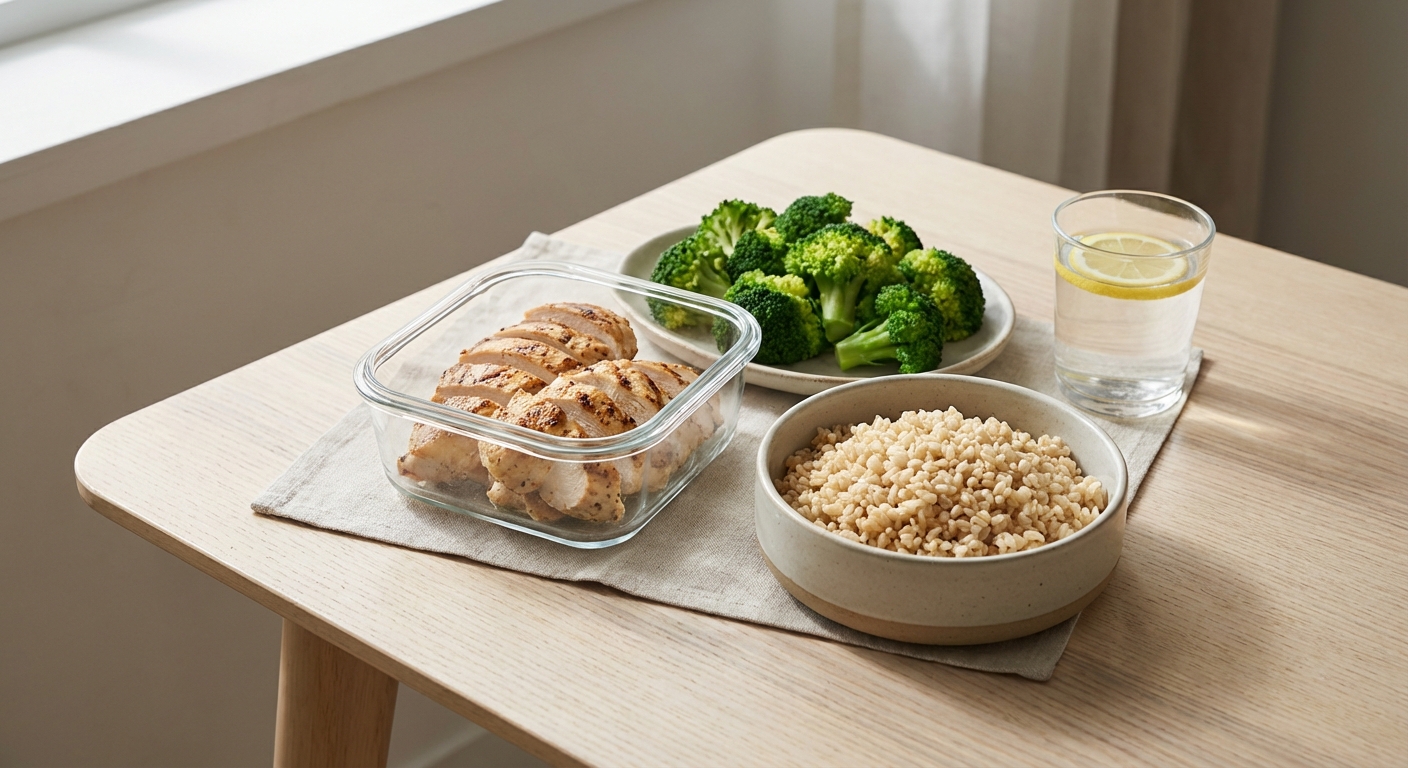
Training provides the stimulus for growth, but nutrition provides the building blocks.
Caloric Intake
| Goal | Calories | Expected Outcome |
|---|---|---|
| Build muscle (recommended) | +200 to +300 above maintenance | Gain strength and muscle with minimal fat |
| Maintain weight | At maintenance | Slower muscle gain, recomposition |
| Lose fat | -200 to -300 below maintenance | Slower strength gains, fat loss |
Protein Targets (1.6-2.2g per kg daily)
| Body Weight | Daily Protein Target |
|---|---|
| 130 lbs / 59 kg | 95-130g |
| 150 lbs / 68 kg | 110-150g |
| 170 lbs / 77 kg | 125-170g |
| 190 lbs / 86 kg | 140-190g |
| 210 lbs / 95 kg | 155-210g |
Sample Training Day Meals
| Meal | Timing | Example |
|---|---|---|
| Breakfast | Morning | 3 eggs, oatmeal, fruit |
| Pre-workout | 1-3 hrs before | Greek yogurt, banana, nuts |
| Post-workout | Within 2 hrs after | Chicken breast, rice, vegetables |
| Dinner | Evening | Salmon, sweet potato, salad |
Recovery and Sleep

You don't grow in the gym — you grow while recovering. Aim for 7-9 hours per night.
Signs of Under-Recovery
- Strength going down for 2+ sessions in a row
- Persistent joint soreness (different from muscle soreness)
- Poor sleep quality despite adequate time in bed
- Low motivation or dreading sessions you usually enjoy
- Getting sick more frequently
Modifications
| Exercise | Common Issue | Substitute |
|---|---|---|
| Back Squat | Shoulder mobility, low back pain | Goblet Squat or Leg Press |
| Deadlift | Low back discomfort | Trap Bar Deadlift or Romanian Deadlift |
| Bench Press | Shoulder pain | DB Bench Press or Floor Press |
| Overhead Press | Shoulder impingement | Seated DB Press or Landmine Press |
| Pull-ups | Not strong enough yet | Lat Pulldown or Band-Assisted Pull-ups |
| Walking Lunges | Knee pain | Reverse Lunges or Step-ups |
Signs You're Progressing
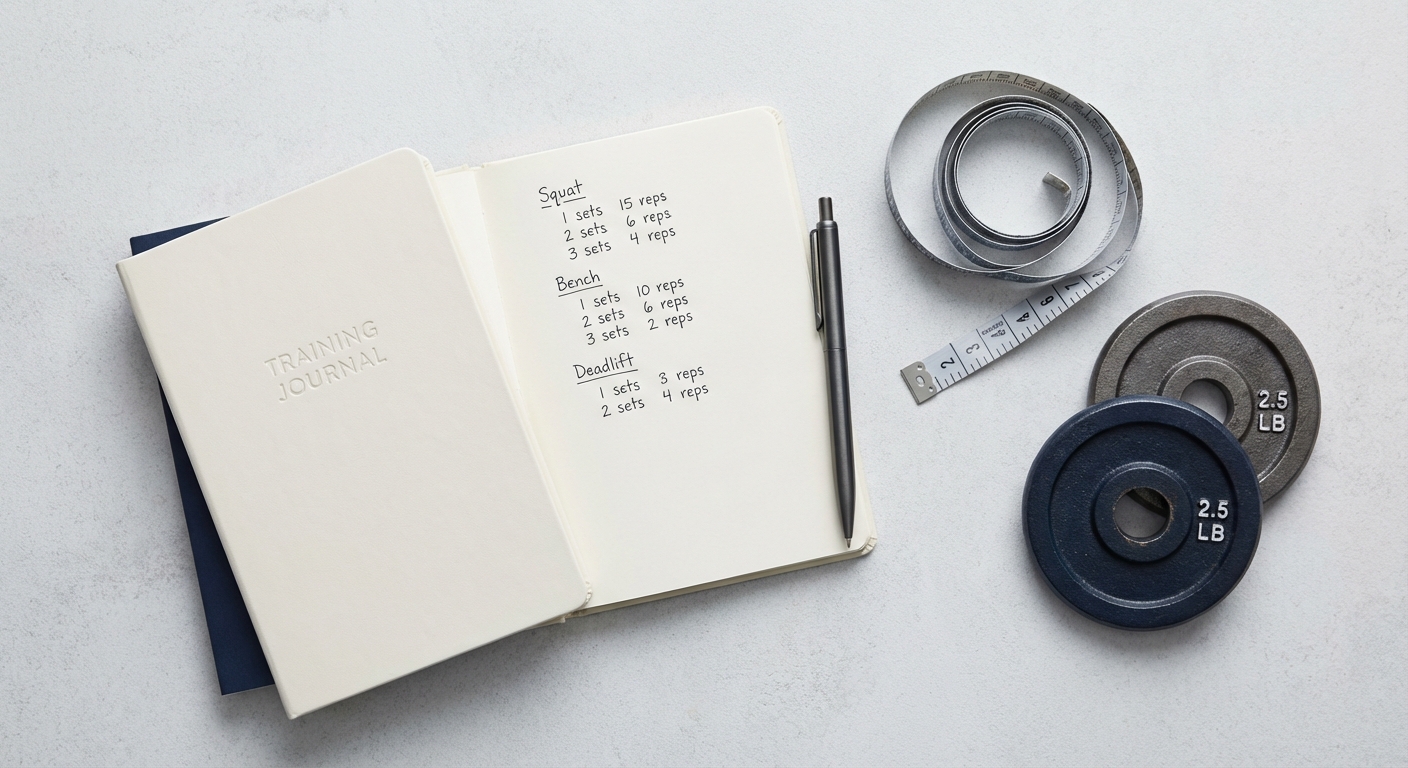
Realistic Strength Milestones
| Lift | Typical Starting Weight | Week 12 Target |
|---|---|---|
| Back Squat | 65-95 lbs | 115-165 lbs |
| Bench Press | 45-75 lbs | 85-125 lbs |
| Deadlift | 95-135 lbs | 155-225 lbs |
| Overhead Press | 35-55 lbs | 65-85 lbs |
When to Move On
Ready to move on if:
- You've completed at least 80% of all prescribed sessions
- You can no longer add weight linearly session-to-session
- Your main lifts have plateaued for 2+ weeks despite adequate sleep and nutrition
- You feel confident performing all four main lifts with good form
Frequently Asked Questions
Q: Can I add cardio?
Yes. 2-3 sessions of 20-30 minutes of moderate cardio per week won't hurt your gains. Avoid intense cardio immediately before lifting.
Q: What if I can only train 2 days per week?
You'll still make progress, just slower. Combine Day 1 and Day 2 movements into two longer sessions, or alternate all three days across a two-week cycle.
Q: Should I train to failure?
No. Leave 1-2 reps in reserve (RPE 7-8) on most sets. Training to failure increases fatigue dramatically and doesn't produce better results for beginners.
Q: Can I change exercises?
Stick with the prescribed exercises for at least 8 weeks. After that, you can swap accessories — keep the main lifts.
Q: I'm really sore after the first week — is that normal?
Yes. DOMS peaks 24-48 hours after training and fades within 3-5 days. It decreases significantly after 1-2 weeks as your body adapts.
Q: Do I need supplements?
The only supplement with strong evidence is creatine monohydrate (3-5g/day). A protein shake is convenient if you struggle to hit daily targets. Everything else is optional.
Q: Can I train with a partner?
Absolutely — and it's encouraged. A training partner provides accountability, can spot you, and gives real-time feedback on form.