

Program Overview
This 12-week program is specifically designed for adults 40 and over who want to build strength and muscle while protecting their joints. As we age, recovery becomes more important, and joint health takes priority over maximum weights.
Why This Program Works for 40+
1. Joint-Friendly Movements
All exercises are selected to minimize stress on knees, shoulders, and lower back while still building strength effectively.
2. Recovery Prioritized
Three training days per week with built-in deload weeks ensures adequate recovery time for older trainees.
3. Volume Over Intensity
Moderate weights with controlled tempo and full range of motion beat heavy singles for long-term joint health.
4. Mobility Integration
Every session includes mobility work to maintain range of motion and prevent stiffness.
Program Structure
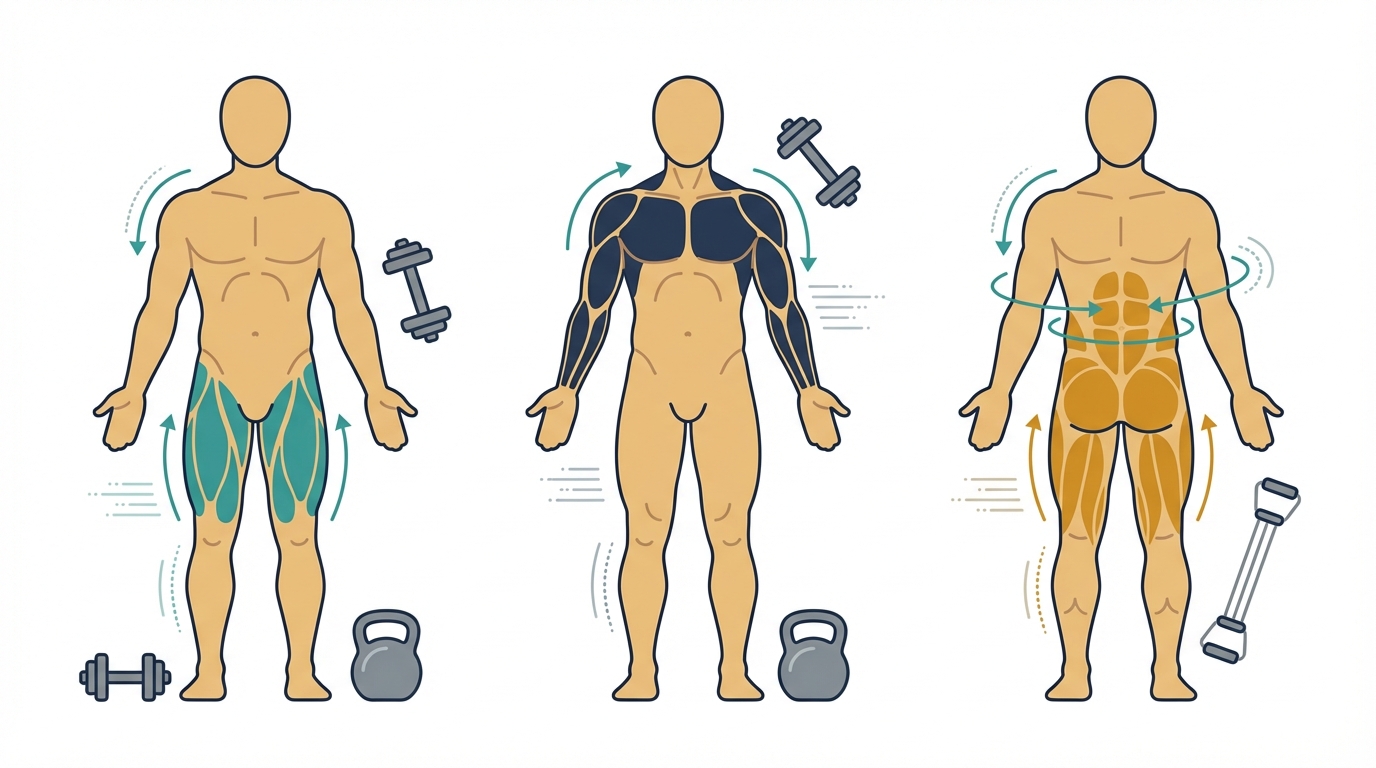
- Frequency: 3 days per week (Monday, Wednesday, Friday ideal)
- Duration: 12 weeks with 3 deload weeks built in
- Session Length: 45–60 minutes
- Rest: 2–3 minutes between main lifts, 60–90 seconds for accessories
Training Philosophy for Masters Athletes
Why Strength Training After 40?
Sarcopenia Prevention
After age 30, we lose 3–5% of muscle mass per decade without intervention. Strength training is the most effective way to combat this natural decline.
Bone Density
Resistance training stimulates bone formation, crucial for preventing osteoporosis as we age.
Metabolic Health
Muscle is metabolic currency. More muscle means better insulin sensitivity, easier weight management, and reduced risk of metabolic disease.
Hormone Optimization
While testosterone naturally declines with age, strength training helps maintain optimal levels naturally without supplementation.
Functional Independence
Strength built in the gym translates directly to daily life: carrying groceries, playing with grandkids, maintaining mobility as you age.
Weekly Schedule
Day 1: Lower Body — Quad Focus
Warm-Up (10 minutes)
- 5 minutes light cardio (bike or brisk walk)
- Dynamic leg swings: 10 each direction
- Hip circles: 10 each direction
- Bodyweight squats: 2 sets × 10 reps
Day 1: Lower Body — Quad Focus
| Exercise | Wk 1-4 | Wk 5-8 | Wk 9-12 | Rest | Notes |
|---|---|---|---|---|---|
| A1. Trap Bar Deadlift / Goblet Squat | 3×10 | 4×8 | 4×6 | 2-3 min | Tempo: 3-1-explosive |
| A2. Incline DB Press | 3×10-12 | 3×10-12 | 3×10-12 | 2 min | 45° incline, shoulder-safe |
| B1. Bulgarian Split Squat | 3×8-10/leg | 3×8-10/leg | 3×8-10/leg | 90 sec | Control the descent |
| B2. Cable Row (seated) | 3×12-15 | 3×12-15 | 3×12-15 | 90 sec | Squeeze shoulder blades |
| C1. Face Pulls | 3×15-20 | 3×15-20 | 3×15-20 | 60 sec | Critical for shoulder health |
| C2. Dead Bug | 3×8/side | 3×8/side | 3×8/side | 60 sec | Lower back pressed to floor |
Cool Down (5 minutes)
- Static stretches for hips, hamstrings, chest
- Deep breathing exercises
Day 2: Upper Body — Push/Pull Balance
Warm-Up (10 minutes)
- 5 minutes light cardio
- Arm circles: 10 each direction
- Band pull-aparts: 2 sets × 15 reps
- Light dumbbell presses: 2 sets × 10 reps
Day 2: Upper Body — Push/Pull Balance
| Exercise | Sets × Reps | Rest | Notes |
|---|---|---|---|
| A1. Landmine Press | 4×8-10/side | 2 min | Easier on shoulders than OH press |
| A2. Chest-Supported Row | 4×10-12 | 2 min | Removes lower back strain |
| B1. DB Bench Press (neutral grip) | 3×10-12 | 90 sec | Palms facing — reduces shoulder stress |
| B2. Lat Pulldown (wide grip) | 3×10-12 | 90 sec | Control — don't use momentum |
| C1. DB Lateral Raise | 3×12-15 | 60 sec | Light weight, perfect form |
| C2. Tricep Pushdowns (rope) | 3×12-15 | 60 sec | |
| C3. DB Hammer Curl | 3×10-12 | 60 sec |
Cool Down (5 minutes)
- Doorway chest stretch
- Upper back stretches
- Neck mobility
Day 3: Full Body — Posterior Chain Focus
Warm-Up (10 minutes)
- 5 minutes light cardio
- Cat-cow stretches: 10 reps
- Bird-dogs: 2 sets × 5 reps per side
- Bodyweight Romanian deadlifts: 2 sets × 10 reps
Day 3: Full Body — Posterior Chain Focus
| Exercise | Wk 1-4 | Wk 5-8 | Wk 9-12 | Rest | Notes |
|---|---|---|---|---|---|
| A1. Romanian Deadlift (DB) | 3×10 | 4×8 | 4×8 | 2-3 min | Feel hamstring stretch at bottom |
| A2. Push-Up Variation | 4×8-12 | 4×8-12 | 4×8-12 | 2 min | Incline if floor is too hard |
| B1. Step-Ups (bench/box) | 3×10/leg | 3×10/leg | 3×10/leg | 90 sec | Controlled up and down |
| B2. Single-Leg RDL | 3×8/leg | 3×8/leg | 3×8/leg | 90 sec | Great for balance & hip stability |
| C1. Farmer's Carry | 3×40 yds | 3×40 yds | 3×40 yds | 90 sec | Heavy DBs, upright posture |
| C2. Pallof Press | 3×10/side | 3×10/side | 3×10/side | 60 sec | Anti-rotation core exercise |
| C3. Side Plank | 2×30-45s/side | 2×30-45s/side | 2×30-45s/side | 60 sec |
Cool Down (5 minutes)
- Hamstring stretches
- Hip flexor stretches
- Lower back decompression (knees to chest)
Joint Health Protocol
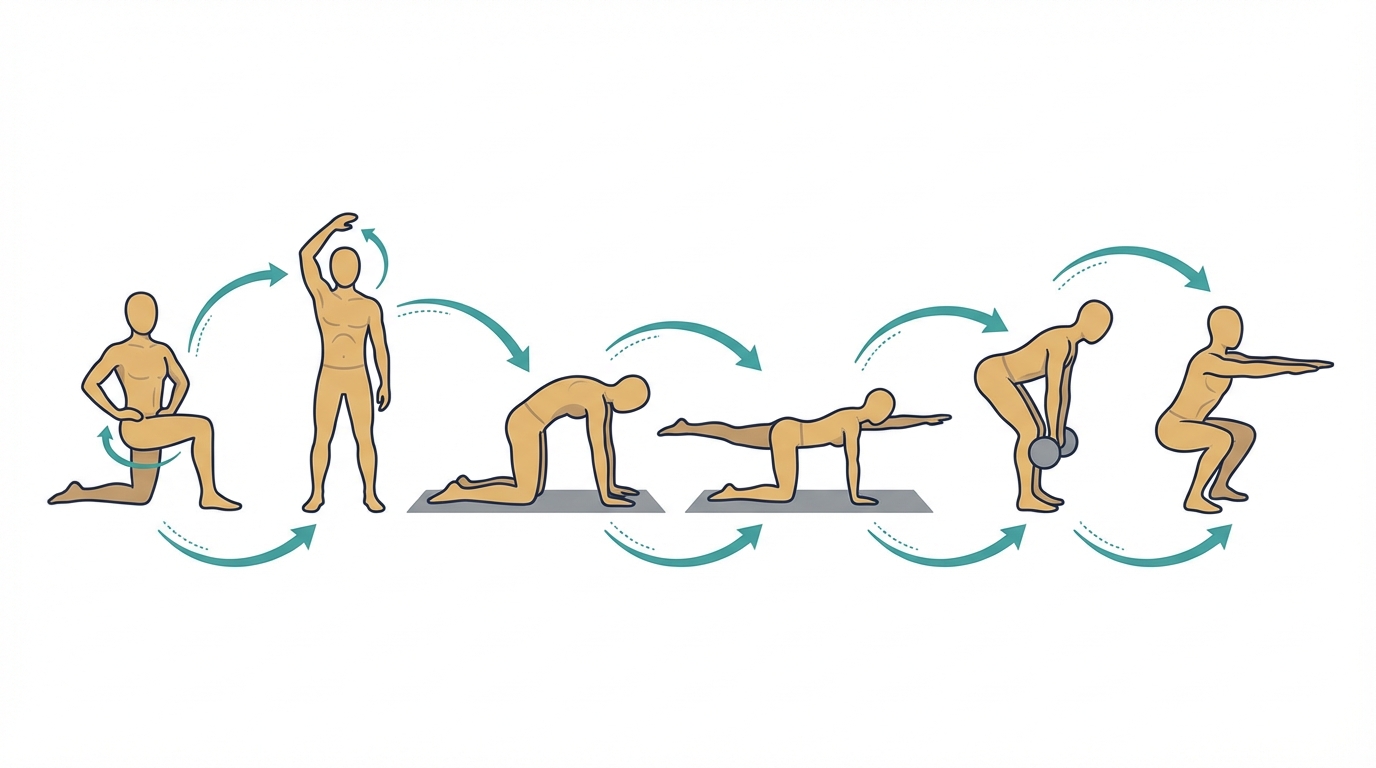
Daily Prehab Routine (10 minutes, every day)
Morning Routine
- Hip CARs (Controlled Articular Rotations) — 3 each direction per hip
- Shoulder CARs — 3 each direction per arm
- Ankle circles — 10 each direction per ankle
- Neck nods — 5 forward/back, 5 side to side
Evening Routine
- Foam rolling — quads, IT band, upper back (2 minutes each)
- Static stretches — hold 30 seconds each: hip flexors, hamstrings, chest/pecs, lats
Exercise Modifications for Common Issues
Knee Pain
| Instead of | Substitute |
|---|---|
| Free squats | Box squats |
| Standard leg press | Leg press with feet high on platform |
| Lunges | Step-ups |
| Seated leg curls | Lying leg curls |
Shoulder Pain
| Instead of | Substitute |
|---|---|
| Overhead press | Landmine press |
| Barbell bench press | Neutral grip dumbbell press |
| Full ROM bench | Floor press (reduced ROM) |
| Barbell rows | Landmine rows |
Lower Back Sensitivity
| Instead of | Substitute |
|---|---|
| Conventional deadlift | Trap bar deadlift |
| Bent-over row | Chest-supported row |
| Back squats | Front squats or goblet squats |
| General core work | Bird-dogs and McGill curls |
Wrist Issues
| Instead of | Substitute |
|---|---|
| Barbell exercises | Dumbbells (neutral grip) |
| Bench press | Floor press |
| Standard grip | Fat gripz or towels to increase diameter |
| No support | Wrist wraps for support |
Form Video Guides
Proper form is especially critical for masters athletes. These guides cover the main movements in this program — focus on controlled tempo and full range of motion.
Trap Bar Deadlift
Landmine Press
Bulgarian Split Squat
Farmer's Carry
Goblet Squat
Progression for Masters Lifters
The 40+ Progression Rule
Unlike younger lifters who can add weight weekly, masters athletes should progress every 2–3 weeks. Here's why:
- Connective tissue adapts slower than muscle
- Recovery from heavy sessions takes longer
- Joint resilience requires gradual loading
How to Progress
| Week | Action | Details |
|---|---|---|
| Week 1-2 | Establish Baseline | Use a weight you can comfortably complete all sets. Focus on perfect technique. Leave 3-4 reps in reserve. |
| Week 3 | Add Weight | Add 5 lbs to lower body, 2.5-5 lbs to upper body. Continue perfect form. |
| Week 4 | Deload | Keep same weight. Reduce sets by 1 per exercise. Focus on recovery. |
| Repeat | Cycle Again | Begin the next cycle with your new baseline. |
When to Stop Adding Weight
Stop progressing if you experience:
- Joint pain during or after lifting
- Decreased performance for 2 consecutive sessions
- Sleep disruption
- Unusual fatigue
- Motivation drop
Recovery Protocols

Sleep Optimization
Why It Matters After 40: Growth hormone, crucial for recovery and muscle maintenance, is primarily released during deep sleep. Sleep quality often declines with age, making optimization critical.
Sleep Hygiene Checklist
- Consistent bedtime and wake time (even weekends)
- Bedroom temperature 65–68°F
- Blackout curtains or eye mask
- No screens 1 hour before bed
- Caffeine cutoff at 2 PM
- Limit alcohol (disrupts sleep quality)
- Magnesium glycinate 400mg before bed (if approved by doctor)
Active Recovery
On Rest Days:
- Walking: 30–45 minutes at comfortable pace
- Light swimming: 20–30 minutes
- Yoga or gentle stretching: 20–30 minutes
- Keep heart rate below 120 BPM
Avoid on Rest Days:
- High-intensity interval training
- Heavy lifting
- Competitive sports
- Anything that leaves you sore for lifting days
Stress Management
Chronic stress elevates cortisol, which impairs muscle recovery, increases fat storage, disrupts sleep, and raises blood pressure.
Daily Stress Management (pick 1–2):
- 10-minute meditation (apps: Headspace, Calm)
- Deep breathing: 4 seconds in, 7 seconds hold, 8 seconds out
- Nature exposure: 20 minutes outside
- Social connection: call a friend or family member
- Hobby time: reading, gardening, music
Nutrition for Masters Athletes

Protein Requirements (Higher Than You Think)
Research shows adults over 40 need more protein than younger adults to maintain and build muscle. The phenomenon of "anabolic resistance" means older muscles require a higher protein threshold to trigger muscle protein synthesis.
Target: 1.6–2.2g per kg bodyweight (0.73–1.0g per lb)
Example: A 180 lb person needs 130–180g protein daily.
Quality Protein Sources
| Source | Benefit |
|---|---|
| Fish (salmon, tuna, cod) | Also provides omega-3 fatty acids |
| Chicken breast | Lean, versatile protein source |
| Lean beef (2-3x/week) | Iron and B12 rich |
| Eggs (whole) | Complete protein, healthy fats |
| Greek yogurt | Probiotics plus protein |
| Cottage cheese | Casein protein, great before bed |
| Whey or plant protein powder | Convenient post-workout option |
Anti-Inflammatory Foods
Joint health depends partly on reducing systemic inflammation. Focus on including anti-inflammatory foods and limiting pro-inflammatory ones.
Include Daily
| Food | How Often |
|---|---|
| Fatty fish (salmon, sardines, mackerel) | 3-4x per week |
| Leafy greens (spinach, kale) | Daily |
| Berries (blueberries, cherries) | Daily |
| Turmeric (with black pepper) | Daily |
| Ginger | Daily |
| Green tea | Daily |
| Extra virgin olive oil | Daily |
Limit or Avoid
| Food | Reason |
|---|---|
| Processed vegetable oils (soybean, corn, canola) | Pro-inflammatory omega-6 |
| Excessive sugar | Drives systemic inflammation |
| Processed meats | Linked to inflammation |
| Trans fats | Damages cardiovascular health |
| Excessive alcohol | Impairs recovery and sleep |
Bone Health Nutrients
| Nutrient | Daily Target | Sources | Notes |
|---|---|---|---|
| Calcium | 1,000-1,200mg | Dairy, leafy greens, sardines with bones | Supplement if not getting enough from food |
| Vitamin D | 1,000-2,000 IU | Sunlight, fatty fish, fortified foods | Get blood test to confirm need — many 40+ adults are deficient |
| Vitamin K2 | 100-200mcg | Fermented foods, aged cheese, natto | Directs calcium to bones, not arteries |
| Magnesium | 400-500mg | Nuts, seeds, dark chocolate, leafy greens | Supports muscle relaxation, sleep, and bone health |
Health Monitoring
Track Monthly
Create a simple spreadsheet and record the following metrics each month:
Strength Metrics
| Metric | How to Track |
|---|---|
| Main lift weights | Squat, press, row, hinge — record working weight |
| Rep PRs | Personal records for specific rep ranges |
Body Metrics
| Metric | How to Track |
|---|---|
| Weight | Weekly, same day and time |
| Waist circumference | At navel level |
| Progress photos | Front, side, back — monthly |
Health Markers
| Marker | Target / What to Track |
|---|---|
| Resting heart rate | Morning, before getting up — stable or decreasing |
| Blood pressure | Weekly if possible |
| Sleep quality | 1-10 scale, aim for 7+ consistently |
| Energy levels | 1-10 scale |
| Joint pain | 0-10 scale per joint — keep at 2 or below |
When to See a Doctor
Schedule an appointment if you experience:
- Chest pain during or after exercise
- Unusual shortness of breath
- Dizziness or fainting
- Persistent joint pain (more than 2 weeks)
- Unexplained weight loss
- Blood pressure consistently over 140/90
Recommended Annual Tests for 40+ Lifters
| Test | Purpose |
|---|---|
| Comprehensive metabolic panel | Kidney, liver, blood sugar baseline |
| Lipid panel | Cholesterol and cardiovascular risk |
| Testosterone (total and free) | Hormone health baseline |
| Vitamin D | Crucial for bone and immune health |
| HbA1c | Long-term blood sugar marker |
| C-reactive protein | Systemic inflammation marker |
| Bone density scan (DEXA) | Every 2 years — osteoporosis screening |
Common Mistakes Masters Lifters Make
1. Training Like You're 25
The Problem: Using the same volume, intensity, and frequency as when you were younger.
The Solution: Accept that recovery takes longer. Embrace lower volume with higher quality. More days off = better results.
2. Ignoring Joint Pain
The Problem: "No pain, no gain" mentality leads to serious injuries that take months to heal.
The Solution: Distinguish between muscle fatigue (good) and joint pain (bad). Modify exercises immediately when joints hurt.
3. Skipping Warm-Ups
The Problem: Cold tissues are prone to injury, especially as we age.
The Solution: Never skip the 10-minute warm-up. Your joints will thank you.
4. Neglecting Mobility
The Problem: Strength without mobility leads to compensation patterns and injury.
The Solution: Spend 10 minutes daily on mobility. It's as important as the training itself.
5. Inadequate Protein
The Problem: Eating like a sedentary person while trying to build muscle.
The Solution: Prioritize protein at every meal. Track intake for a week to see where you stand.
The Masters Athlete Mindset
Embrace the Long Game
At 40+, you're not training for next summer — you're training for your 60s, 70s, and 80s. Every workout is an investment in:
- Maintaining independence
- Avoiding falls and fractures
- Keeping your mind sharp
- Enjoying an active lifestyle with family
Celebrate Non-Scale Victories
- Getting up from the floor easily
- Carrying all groceries in one trip
- Playing with grandkids without getting winded
- Sleeping through the night
- Better posture
- No back pain
Community Matters
Consider:
- Training with a partner your age
- Joining a masters lifting group
- Hiring a trainer who specializes in 40+ athletes
- Online communities of age-group athletes
Frequently Asked Questions
Q: Is it too late to start strength training at 45/50/55/60+?
Absolutely not. Research shows people in their 70s and 80s can still build significant muscle and strength. The sooner you start, the better, but it's never too late.
Q: Should I take testosterone replacement therapy (TRT)?
This is a personal decision between you and your doctor. Many men build impressive physiques naturally well into their 50s and 60s. Optimize sleep, nutrition, stress, and training first before considering TRT. This information is not medical advice.
Q: How do I train around arthritis?
Work with a physical therapist or experienced trainer. Generally: avoid high impact, use full range of motion through pain-free range, strengthen muscles around affected joints, and stay consistent (movement helps arthritis).
Q: What's the best cardio for someone over 40?
Low-impact options: walking, cycling, swimming, elliptical. Keep heart rate in zone 2 (60-70% max heart rate) for metabolic health. Limit high-impact running if you have joint issues.
Q: Should I take creatine?
Yes, unless contraindicated by a medical condition. Creatine is one of the most researched supplements, safe for long-term use, and particularly beneficial for muscle and brain health as we age. Standard dose: 5g daily. Consult your doctor if you have kidney concerns.
Q: How do I deal with old injuries that flare up?
See a physical therapist for a proper diagnosis and rehab protocol. Once cleared, modify exercises to work around the issue. The goal is to train for life, not aggravate old injuries.
Q: My recovery is terrible. What should I do?
Check these in order: 1) Sleep (are you getting 7-9 hours?), 2) Nutrition (adequate protein and calories?), 3) Stress (cortisol impacts recovery), 4) Volume (are you doing too much?), 5) Deload (when was your last one?).
Q: Can I still build muscle after 50?
Yes. While the rate may be slower than in your 20s, studies show significant muscle gain is possible well into your 60s and beyond with proper training and nutrition.
Q: Should I lift heavy or light?
Both have value. Use moderate weights (RPE 7-8, leaving 2-3 reps in reserve) for most training. Occasionally go heavier (RPE 8-9) if joints feel good. Prioritize controlled tempo and full range of motion over maximum weight.